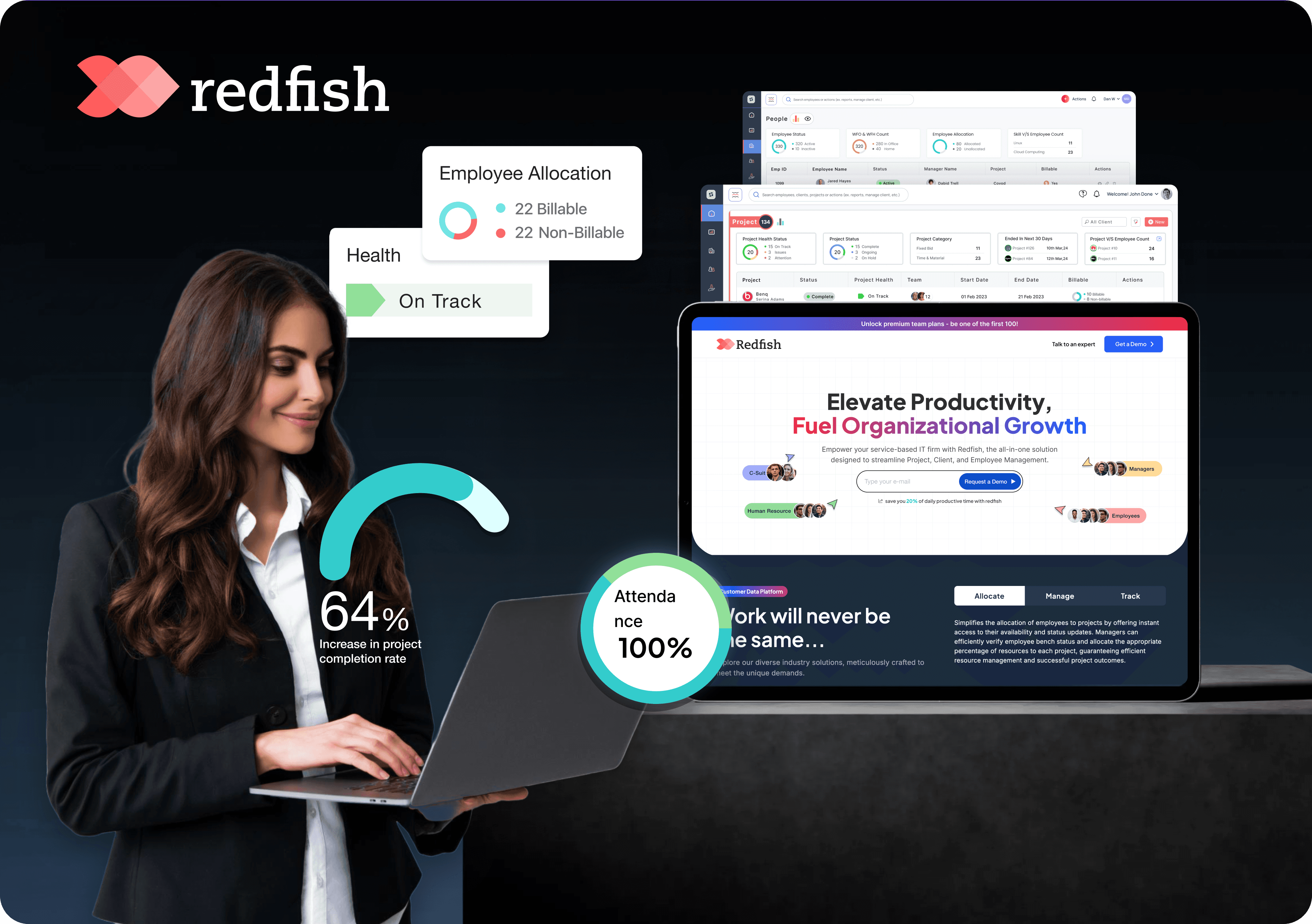
Redfish is an all-in-one HRMS platform designed to streamline people management, project tracking, and internal operations for growing teams through a single, unified system.
Industry
Business Software / SaaS
Year
2024-2025
Project Overview
The project focused on designing a scalable and intuitive HRMS solution that simplifies complex workflows such as employee management, attendance, leave, and resource allocation. The goal was to create a clean, role-based experience that works for HR teams, managers, and leadership while supporting long-term product growth.
Role & Responsibilities
Defining the overall UX strategy and design direction
Designing core user flows and information architecture
Creating wireframes, prototypes, and high-fidelity UI designs
Ensuring design consistency across multiple modules
Collaborating closely with product managers and developers
Iterating designs based on feedback and usability insights
workflow
1. Research & Discovery
Before starting the design, I focused on understanding how organizations manage people, projects, and internal operations, and where existing HR tools fall short.
Conducted stakeholder interviews to understand business goals, operational challenges, and success metrics
Studied real-world HR workflows such as employee onboarding, attendance, leave management, and resource allocation
Analyzed existing HRMS and people-management tools to identify usability gaps, feature overload, and workflow inefficiencies
Identified key user roles: HR Admin, Manager, Employee, and Leadership
Documented pain points around data fragmentation, manual processes, and lack of real-time visibility
2. UX Strategy & Information Architecture
Translated research insights into a clear, scalable HR experience that supports multiple roles.
Defined role-based journeys for HR admins, managers, and employees
Structured information architecture to unify HR, resource, and reporting modules without overwhelming users
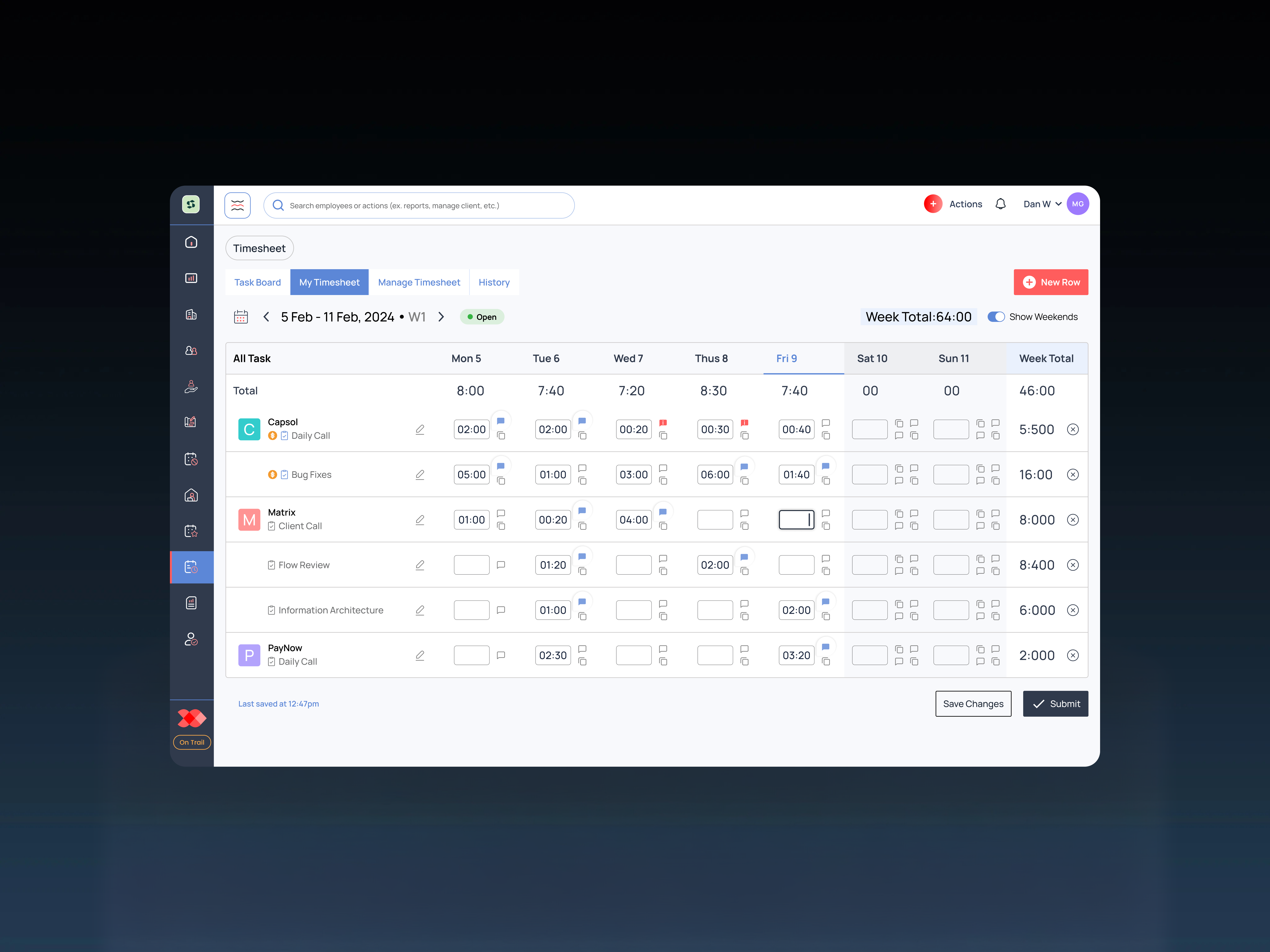
Designed core workflows such as attendance tracking, leave requests, approvals, and employee management
Mapped edge cases including multi-level approvals, overlapping leaves, and access control
Ensured the system architecture could scale with new modules and organizational growth
3. Wireframing & UI Design
Focused on clarity, efficiency, and consistency across complex HR workflows.
Created low-fidelity wireframes to validate layout, navigation, and task flow early
Designed high-fidelity UI screens using a modular, system-driven approach
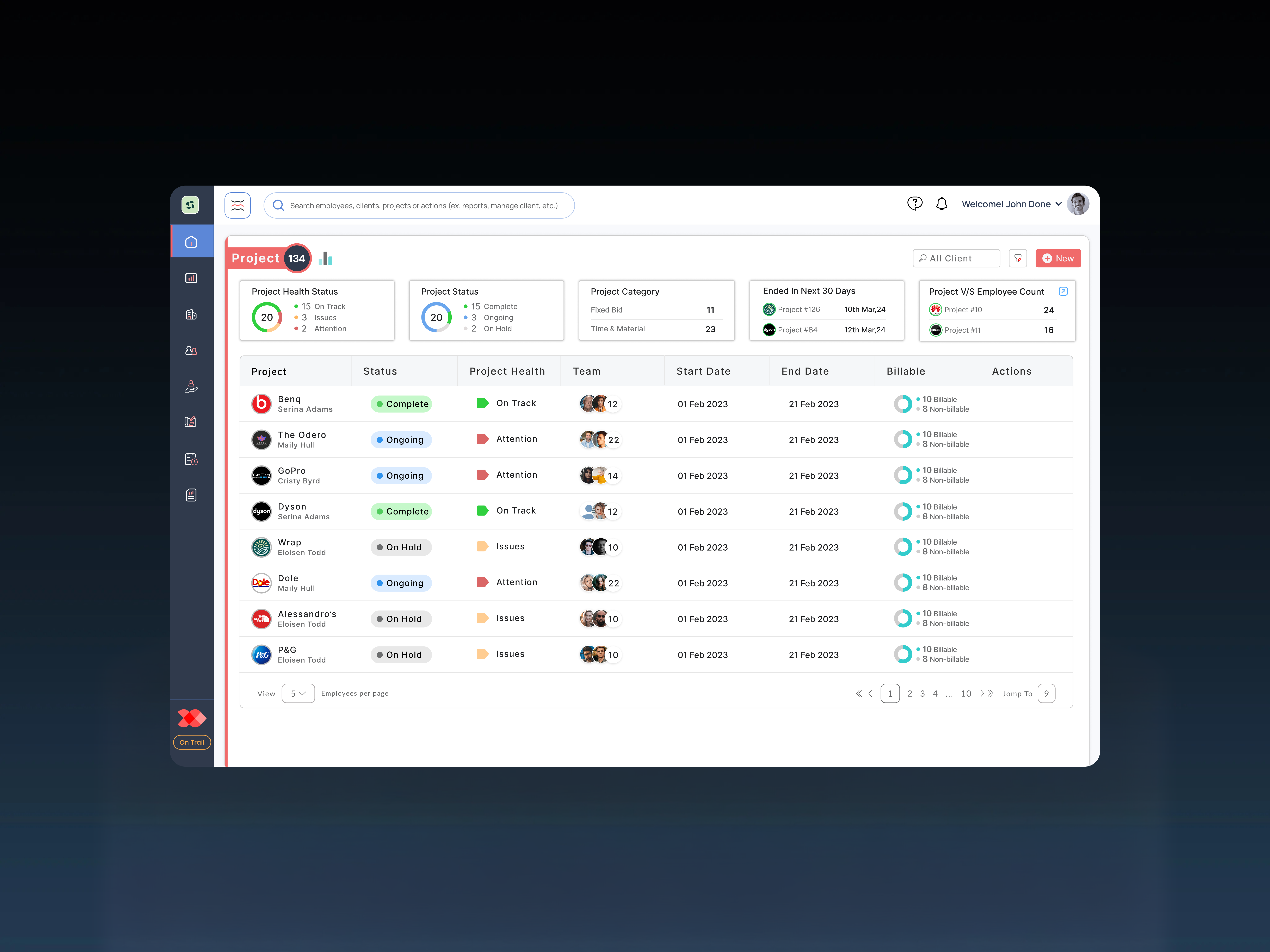
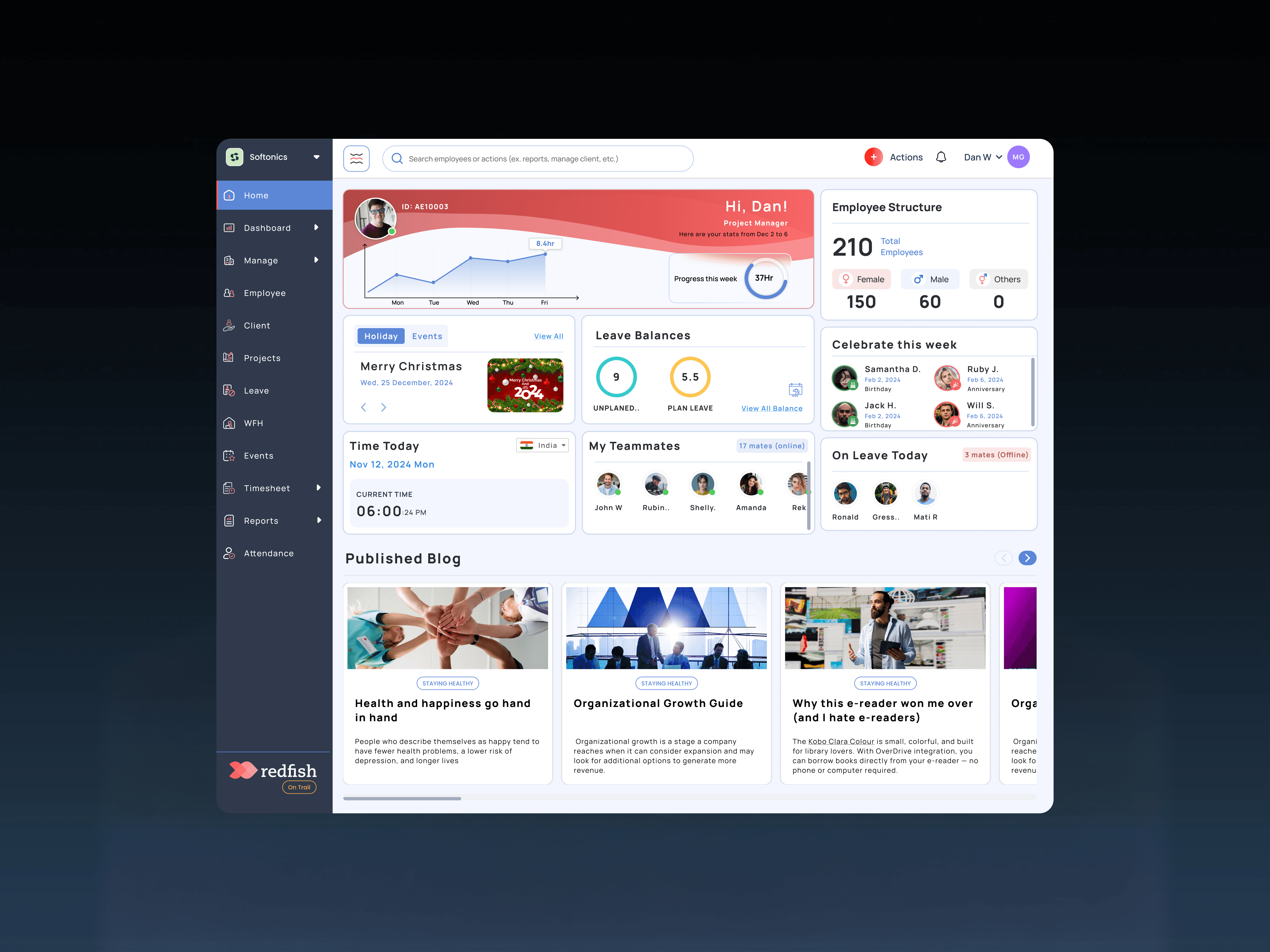
Built dashboards tailored to each role, highlighting relevant actions and insights
Designed key interfaces including employee profiles, attendance views, leave management, and admin controls
Maintained visual consistency while supporting dense data and frequent interactions
4. Validation & Iteration
Refined the product through continuous feedback and close collaboration.
Conducted usability testing using interactive prototypes
Iterated designs based on internal feedback from stakeholders and developers
Improved micro-interactions, empty states, system feedback, and error handling
Optimized high-frequency workflows to reduce clicks and cognitive load
Delivered development-ready designs aligned with scalability and long-term product vision
Results & Impact
The Redfish all-in-one HRMS Platform unified people management, project tracking, and internal operations into a scalable, role-based SaaS experience. By addressing fragmented workflows and improving clarity across core HR processes, the platform delivered measurable improvements in usability and operational efficiency.
Key Outcomes
Reduced task completion time, Users were able to complete common HR tasks (e.g., attendance logging, leave approvals) in 20–30% fewer interactions compared with traditional tools.
Improved workflow clarity, Prototype usability testing showed a 25–35% increase in first-time task success for core HR functions.
Decreased cognitive load, simplified dashboards, and role-specific modules helped reduce user confusion, lowering error rates on key workflows by 15–25% in validation sessions.
Enhanced scalability, the modular architecture supported growth and easily accommodated additional HR modules without major redesign.
Business Value
Centralizing HR operations reduced reliance on multiple disconnected tools and improved visibility for teams and leadership.
Usability improvements and fall-proof workflows established stronger confidence for HR admins and managers, contributing to smoother onboarding and daily task flows.